A boat I bought to keep
I've been sailing for several decades — half a dozen boats, an Atlantic crossing from Martinique to Horta, weeks crewing from Pisa to Nice and along the Spanish Cantabrian coast, charters with family in Greece, Croatia (my favorite), Sicily, Malta. Alongside the Calma, I keep a fifty-year-old Wayfarer dinghy I had restored in England — for the direct contact with wind — and a small motor launch for coastal family trips. Sail in all its forms, from dinghy to cruiser.
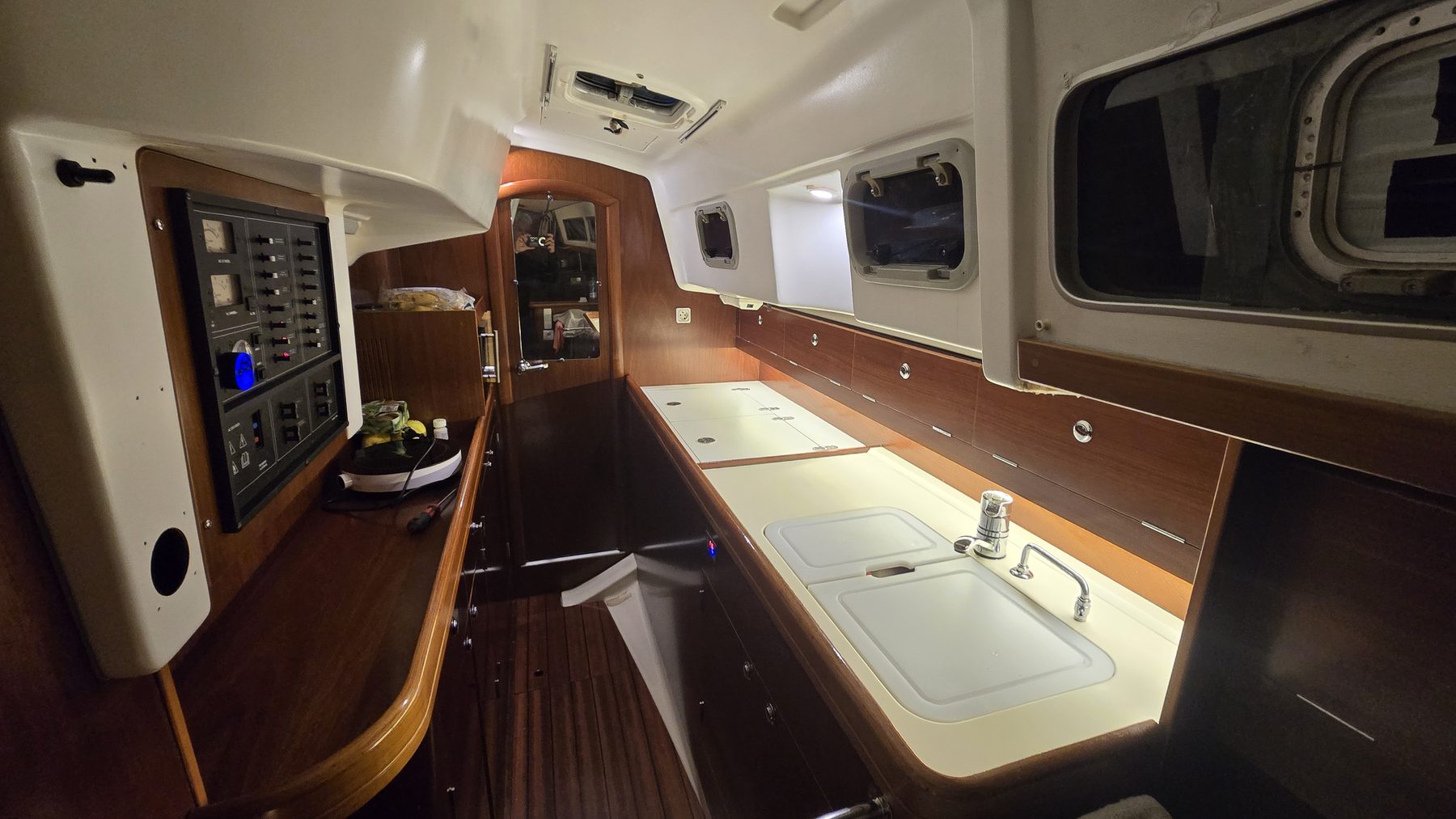
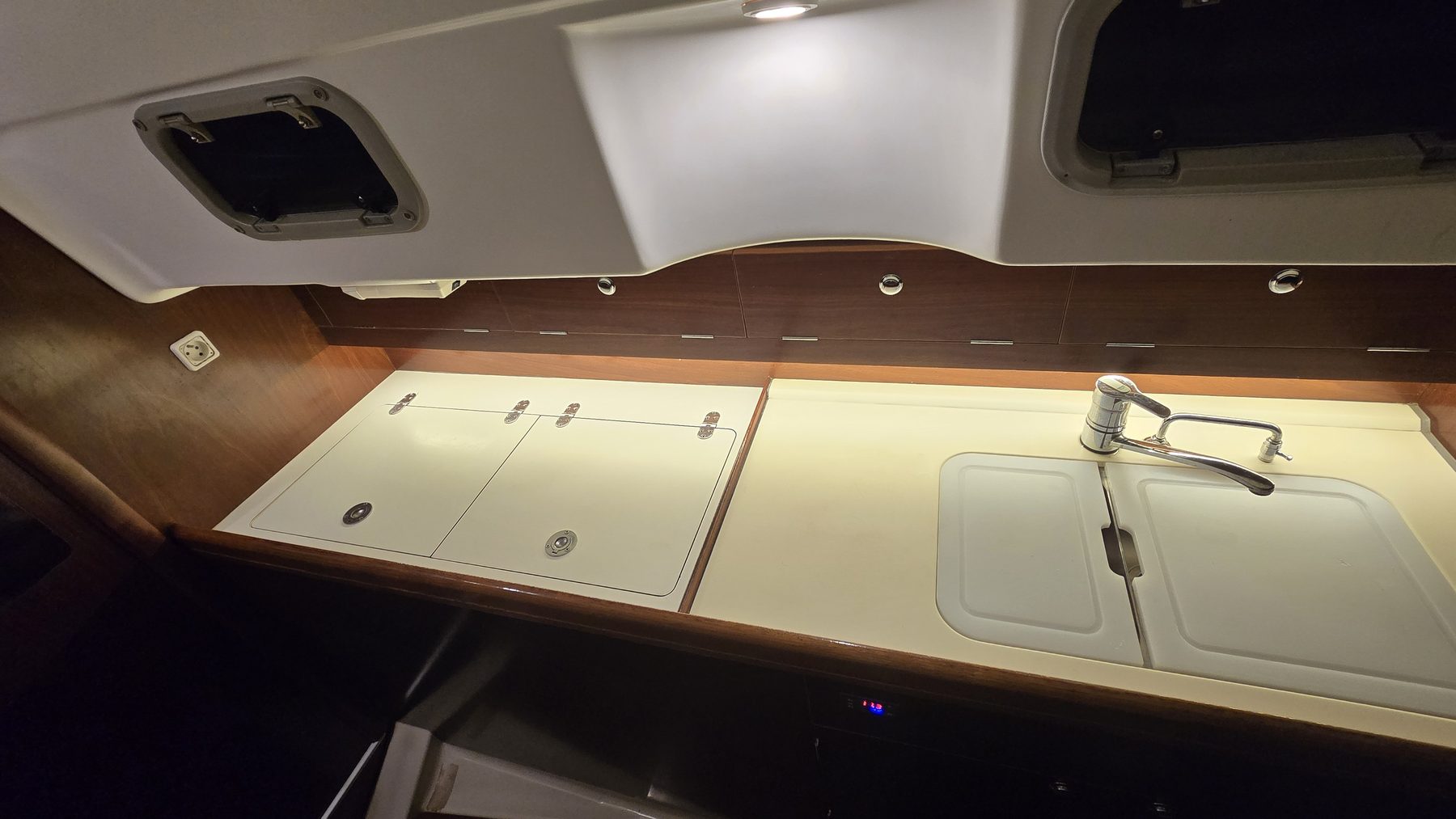
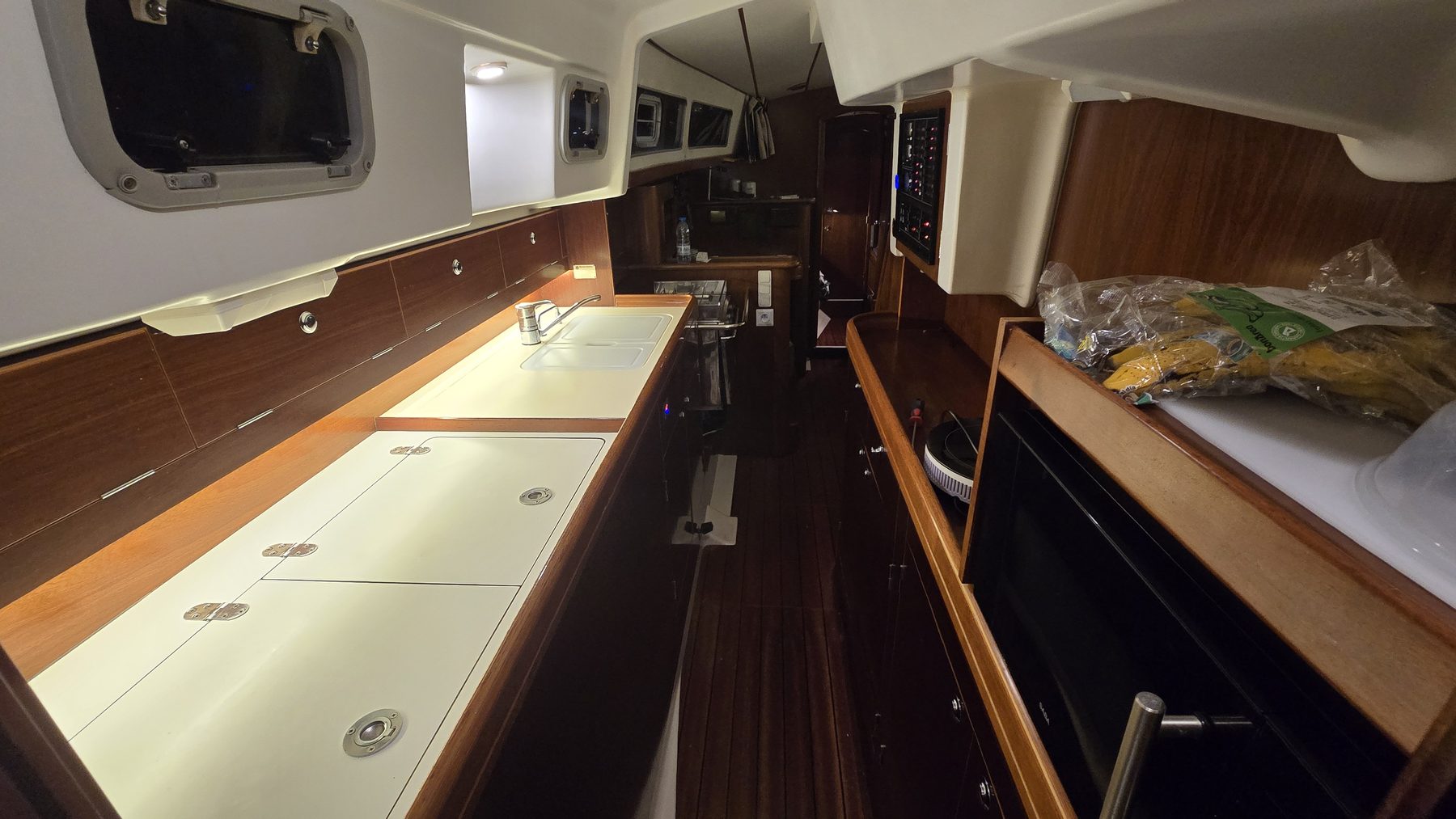
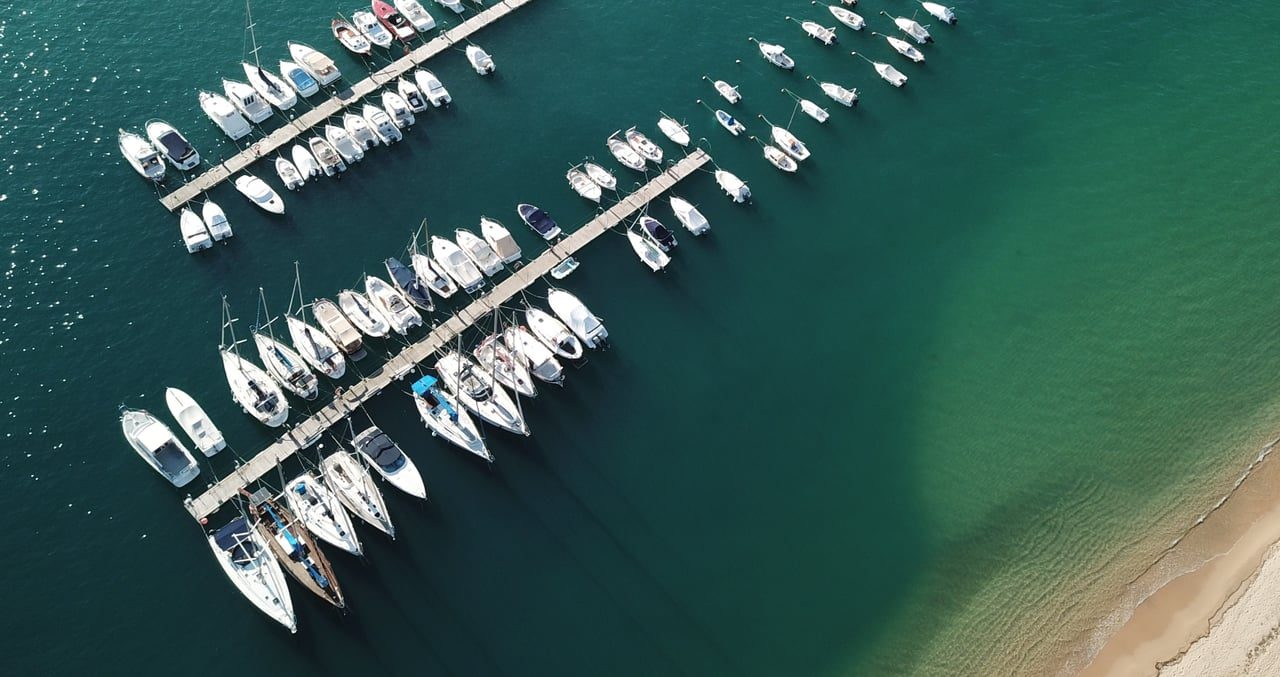
I bought the Calma last November in Cap d'Agde. She was a good boat that had been sitting for a few years — well kept, but quiet. I've put hundreds of hours into bringing her back, with affection, no excess: Volvo MD22 (60 hp) overhauled by a professional mechanic, in-boom mainsail furler rebuilt, hatches restored, new gas installation, refit galley, new electronics rolling out, solar panels, deck shower, new life raft — and many smaller things.
An American chapter, then a French one
I'm Spanish. After studying engineering in Spain, my wife and I went to the United States — first the East Coast for my MBA, then several years on the West Coast, in Seattle. Those were great years; they shaped how we work and how we receive guests. I started sailing seriously around 2001 at the Center for Wooden Boats on Lake Union — the volunteer-built, cedar-and-Sitka-spruce, learn-by-doing kind of place that quietly turns out good sailors. From Lake Union we got out into Puget Sound and up to the San Juan Islands: cold, pine-scented, weather-shaped sailing that ruins you for anywhere else. Until you discover the Mediterranean.
These days, work takes me to Miami too — a different planet, different water, but delicious in its own way. Calypso Instruments, the company I run, has a U.S. subsidiary with employees, customers, and suppliers; I'm in the States several weeks a year. I hold a U.S. visa. I work in English every day; my French is functional but earned.
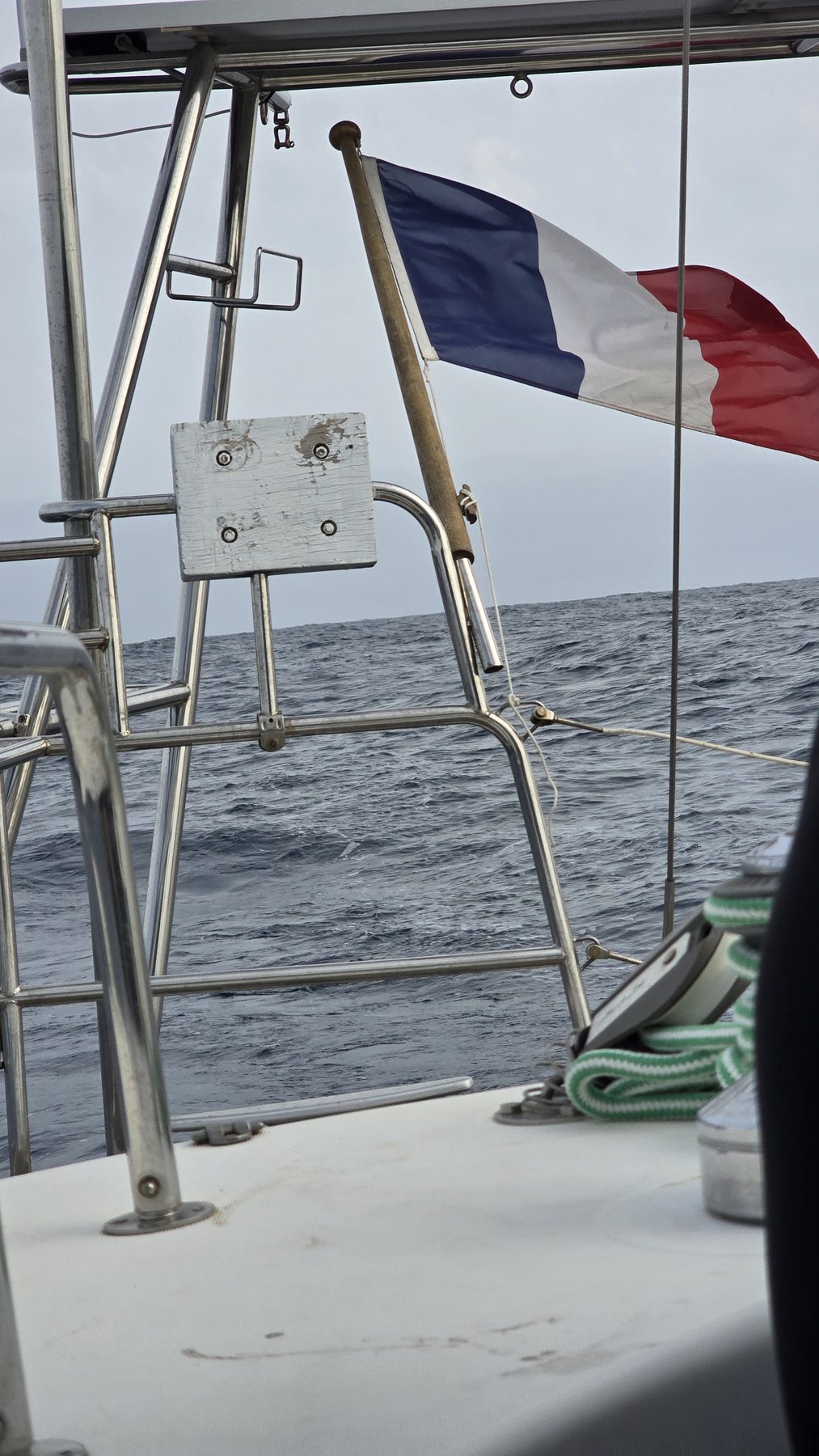
Back in Europe, my wife and I built a family. Our two sons went through the French school system from kindergarten onward; both are now in university and bilingual French-English. We split our life between Spain, France (we keep an apartment in the Pyrenees), and the U.S. CLUB CALMA flies a French flag because it gives us — and our French members — the cleanest legal and tax framework: a French simplified joint-stock company, French invoices with French VAT, French contract law, a French point of contact. The hospitality, though, is genuinely tri-cultural.
Why a club, not a charter
I wanted the Calma to stay alive and well-kept, with her costs absorbed without strain — neither financial nor emotional. That's the club idea: six couples sharing access to a beautiful boat without owning it or having to look after it, and sharing a certain Mediterranean way of doing things — ideally for several seasons in a row.
The Calma was designed and configured as an owner's boat — Beneteau's "owner version": two real private cabins, two separate heads, volumes designed for cruising in couples. That's the structural difference, and it's what makes a six-person club make sense — instead of putting the boat into more open="open" circulation.
A club, for it to work, asks for something that doesn't fit on a contract. It's a mix of three things: being good hosts, being members of a club, and becoming friends. We're looking for experienced couples who share a love of the Mediterranean, who take care of things, and who enjoy meeting people from different backgrounds.
— Fernando Pascual-Andreu
President, CALMA S.A.S.U.